Why are Self Inking Signature Stamps Popular in Banks and Corporate Offices
Banks and corporate offices handle a large volume of paperwork every day. From approving internal documents to processing financial transactions, signatures are required at multiple stages. Writing the same signature repeatedly can consume time and reduce efficiency. Because of this, many institutions rely on self inking signature stamps. These stamps offer speed, consistency, and convenience in daily operations. Let us look at the reasons behind their popularity and how they support routine office work.
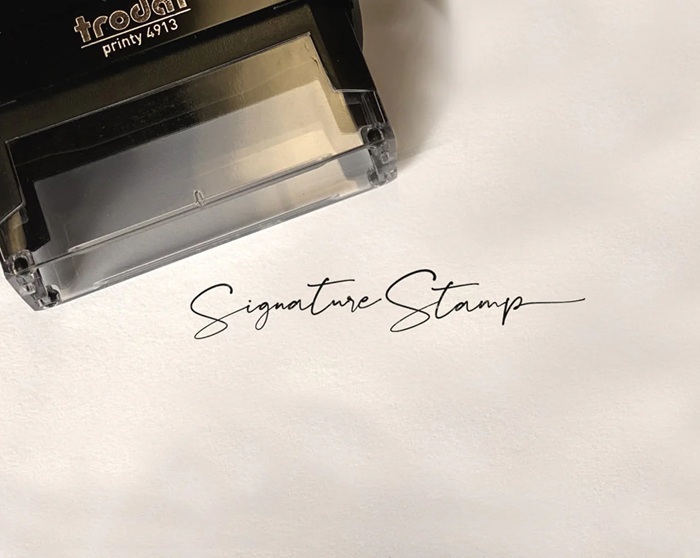
Why are Self Inking Signature Stamps Popular in Banks and Corporate Offices?
Faster Document Processing
In banks and corporate offices, time plays an important role. Employees often need to sign hundreds of documents such as approval forms, memos, invoices, and payment authorizations.
A self inking signature stamp allows a person to place their signature in a single press. There is no need to open an ink pad or refill ink frequently. The ink is built into the stamp mechanism, which makes repeated use simple.
Because of this, document processing becomes faster. Tasks that usually take hours can be completed in less time. This improves overall workflow and reduces delays.
Consistency in Signatures
Handwritten signatures can vary slightly each time. Differences in pressure, speed, or angle may create inconsistencies. In banking and corporate environments, uniform documentation is important.
Self inking signature stamps provide the same impression every time they are used. The alignment, size, and clarity remain consistent. This helps maintain a professional appearance across all documents.
Consistency also reduces confusion. When signatures look identical on official papers, verification becomes easier for internal audits and record keeping.
Reduced Physical Strain
Employees who sign documents repeatedly may experience hand fatigue. Over time, this can affect productivity.
Using a stamp reduces the physical effort required. A simple press replaces multiple handwritten signatures. In high volume departments such as finance or administration, this small change makes a noticeable difference.
As a result, staff members can focus more on decision making rather than repetitive manual tasks.
Improved Efficiency in Check Processing
Banks frequently deal with checks and authorization documents. In certain cases, authorized officials use signature stamps for operational convenience. A common question raised is whether a Signature Stamp Legal for Checks.
In many jurisdictions, a signature stamp is considered valid if it is used with proper authorization and internal controls. However, institutions must follow banking regulations and company policies before applying stamped signatures on financial instruments.
Because of regulatory requirements, banks often maintain strict control over who can access and use these stamps. When used correctly, they support smooth check processing without slowing down daily operations.
Built In Ink System
Traditional rubber stamps require a separate ink pad. Over time, ink pads dry out and impressions become faint. This leads to additional maintenance and interruptions.
Self inking signature stamps come with a built in ink cartridge. The stamp re inks itself after each impression. This keeps the signature clear and readable without constant attention.
The design also reduces the chances of ink smudging on important documents. Clean impressions are essential in corporate records where clarity matters.
Better Control and Security
Security is important in banks and corporate offices. Signature stamps are usually stored securely and issued only to authorized personnel.
Many organizations maintain logs that record when the stamp is used and by whom. This level of control prevents misuse and supports accountability.
In addition, stamps can be customized with specific signature designs that are harder to replicate casually. Combined with internal policies, this adds a layer of document control.
Conclusion
Self inking signature stamps are popular in banks and corporate offices because they simplify routine tasks. They help speed up document handling, maintain consistent signatures, reduce physical strain, and support controlled check processing. For organizations that depend on accuracy and efficiency, these stamps remain a practical solution for daily operations.